
Alasitas: A Magical Time in La Paz, Full of Meaning
Hello and welcome back to the city of La Paz!
This week, something very special happened. On January 24th, the Alasitas Fair opened here in La Paz, and it will continue for about a month. These are such beautiful times in the city, and I really love it. It’s one of those traditions that truly belongs to life up here in the mountains.
What I’ve noticed is that many travelers don’t really know about it. Or they hear about it very quickly, and I only have a short moment to explain, which makes it hard to share the real magic.
And honestly, you have to go there to truly feel it. To walk through the fair, smell the food, hear the music, and see all the tiny dreams everywhere.
So today, I’ll try to explain what the Alasitas Fair is all about.
And if you have a few free hours in La Paz with no big plans, go. Enjoy it. Be part of it.
What Is Alasitas Really About?
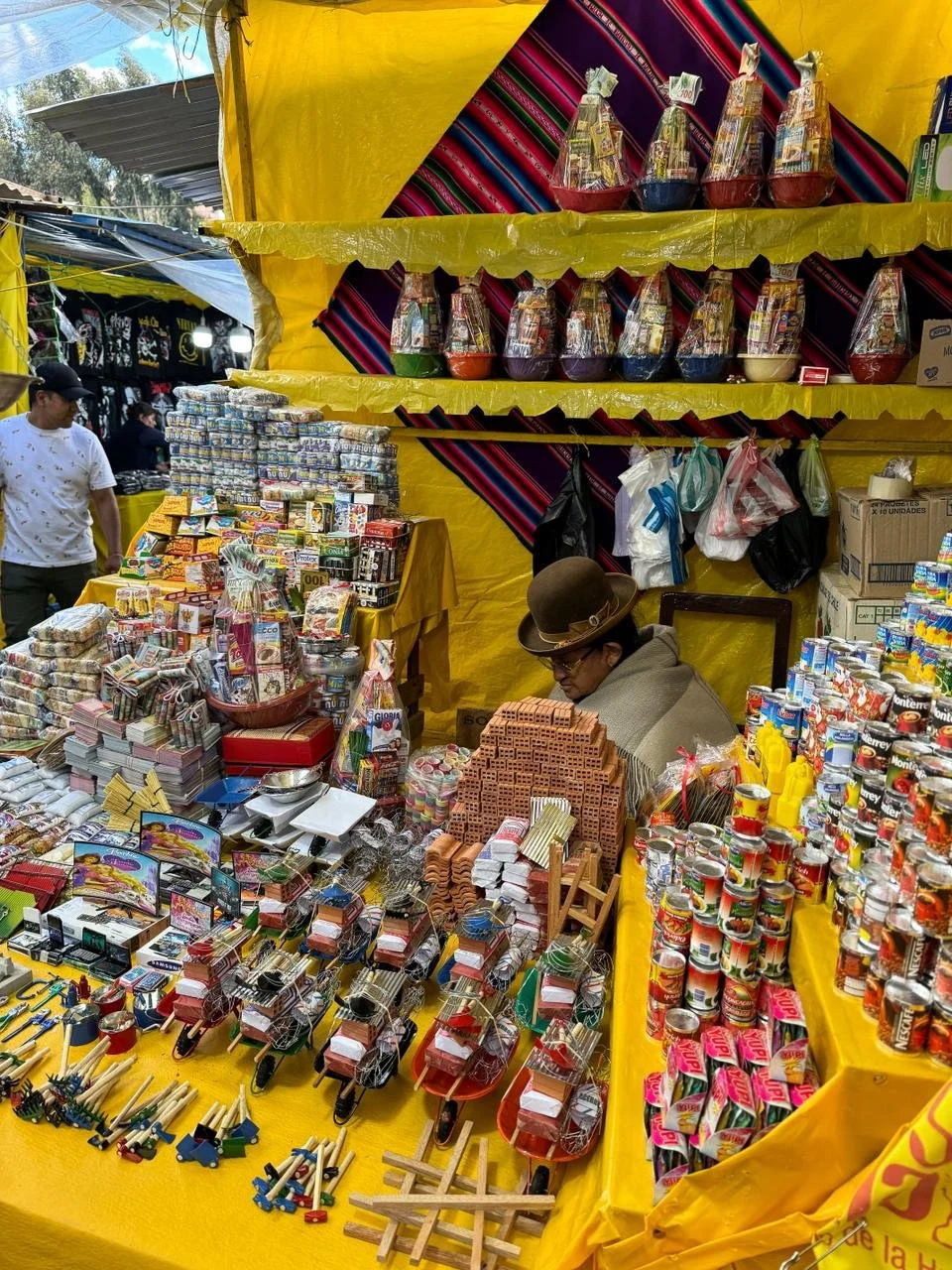
At first, Alasitas looks like a colorful market full of tiny things, games, and street food. But behind all the miniatures, there is something deeper: people’s hopes for the year ahead. Here, you don’t just buy souvenirs, you choose small symbols of what you wish for in life, like love, health, work, travel, or a new home. These mini dreams are blessed by a Yatiri, an Andean spiritual guide, as a way of asking for balance, protection, and abundance. It’s a tradition that connects old beliefs with modern life, where ancient rituals meet passports, laptops, and plane tickets. In the middle of the noise and colors, Alasitas quietly reminds you that dreaming is part of everyday life in Bolivia.
Experiencing Alasitas as a Traveler
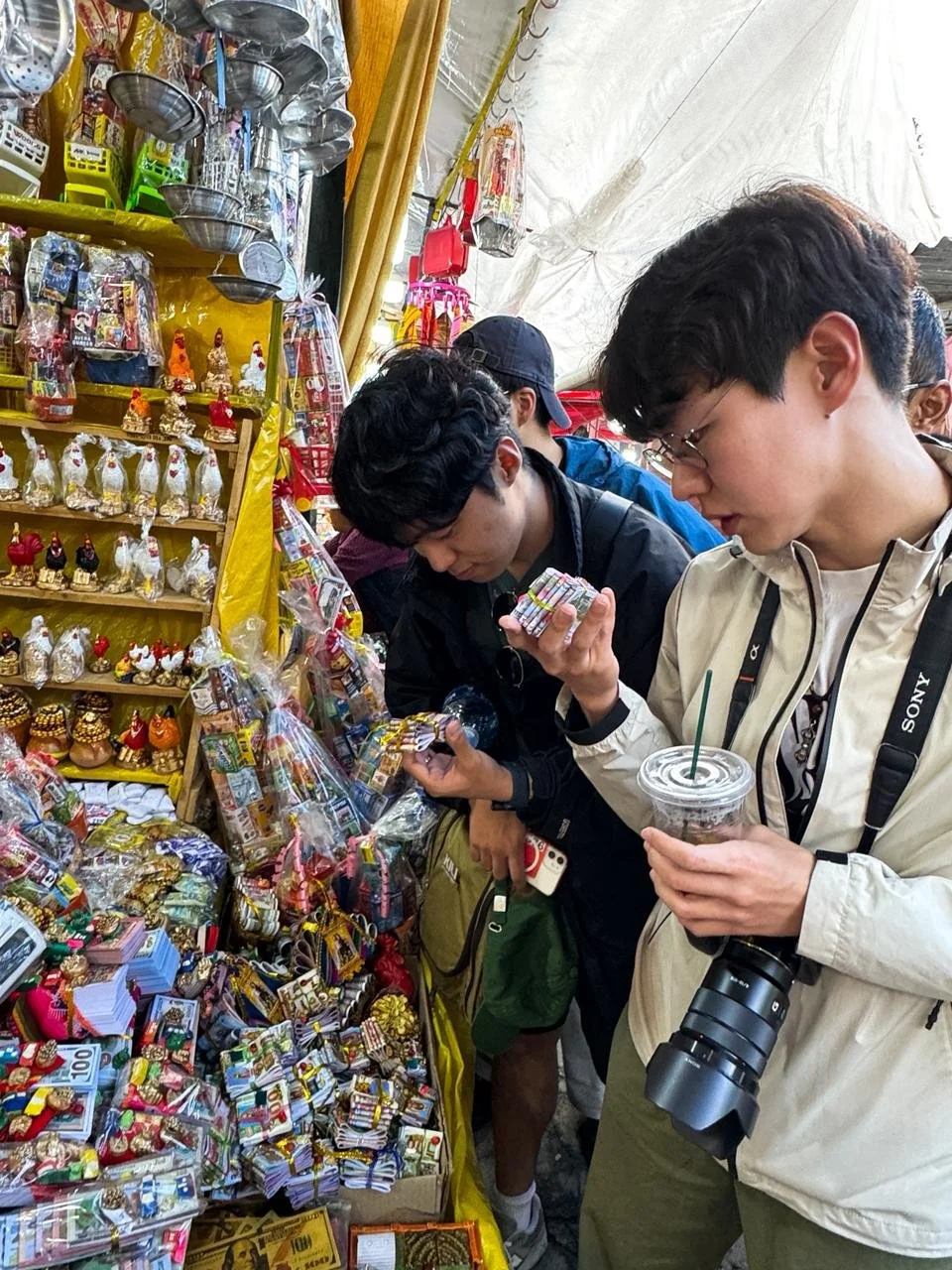
For travelers, Alasitas is not something you just look at, it’s something you join. As you walk through the fair, vendors will smile, explain their miniatures, and often ask about your dreams. Many visitors end up buying a tiny passport, suitcase, or map, wishing for more journeys ahead. Around you, families are eating, laughing, and lining up for blessings, and suddenly you feel part of the rhythm of the city. There is no pressure to understand everything, only to be curious and open. In a few hours, you don’t feel like a tourist anymore, you feel like a guest in a living tradition.
My Personal Alasitas Tips
Alasitas is best enjoyed slowly, like a little adventure you walk into. It’s open every day, but in the late afternoon into early evening the fair really comes alive: more stalls open, more food appears, and the energy grows. Weekends are the most crowded, so go on a weekday if you want it calmer.
Start at the main entrance on Avenida del Ejército, walk slowly, look around, ask questions, buy one favorite miniature, eat something, play a game, and then exit around Plaza Camacho. Bring small cash, an open mind, a charged phone (you’ll take a lot of photos), and a downloaded Google Map in case your signal gets weak. Street food to try: api con pastel, anticucho, and the fun mini snacks like mini hot dogs, mini burgers, or choclo (Andean corn) with cheese. The most common mistake is treating it like “just a market” and missing the meaning, take a few minutes to read about it first, or go with a guide so you catch the real stories behind what you see.
Five Things at Alasitas That Mean More Than They Seem
At Alasitas, almost everything has a story behind it. What looks like a cute souvenir is often a symbol of someone’s biggest wish for the year.
1. Ekeko (The God of Abundance)
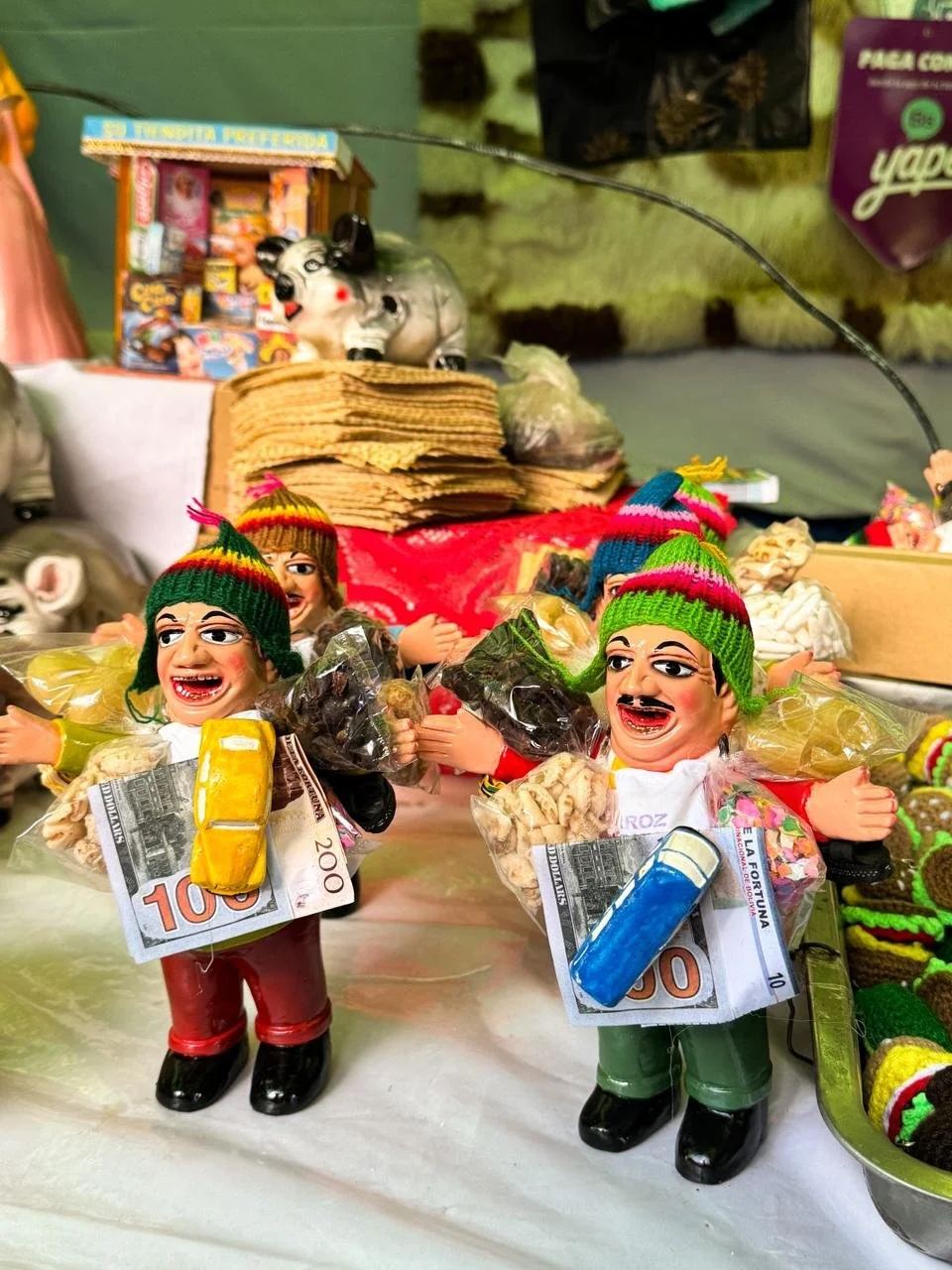
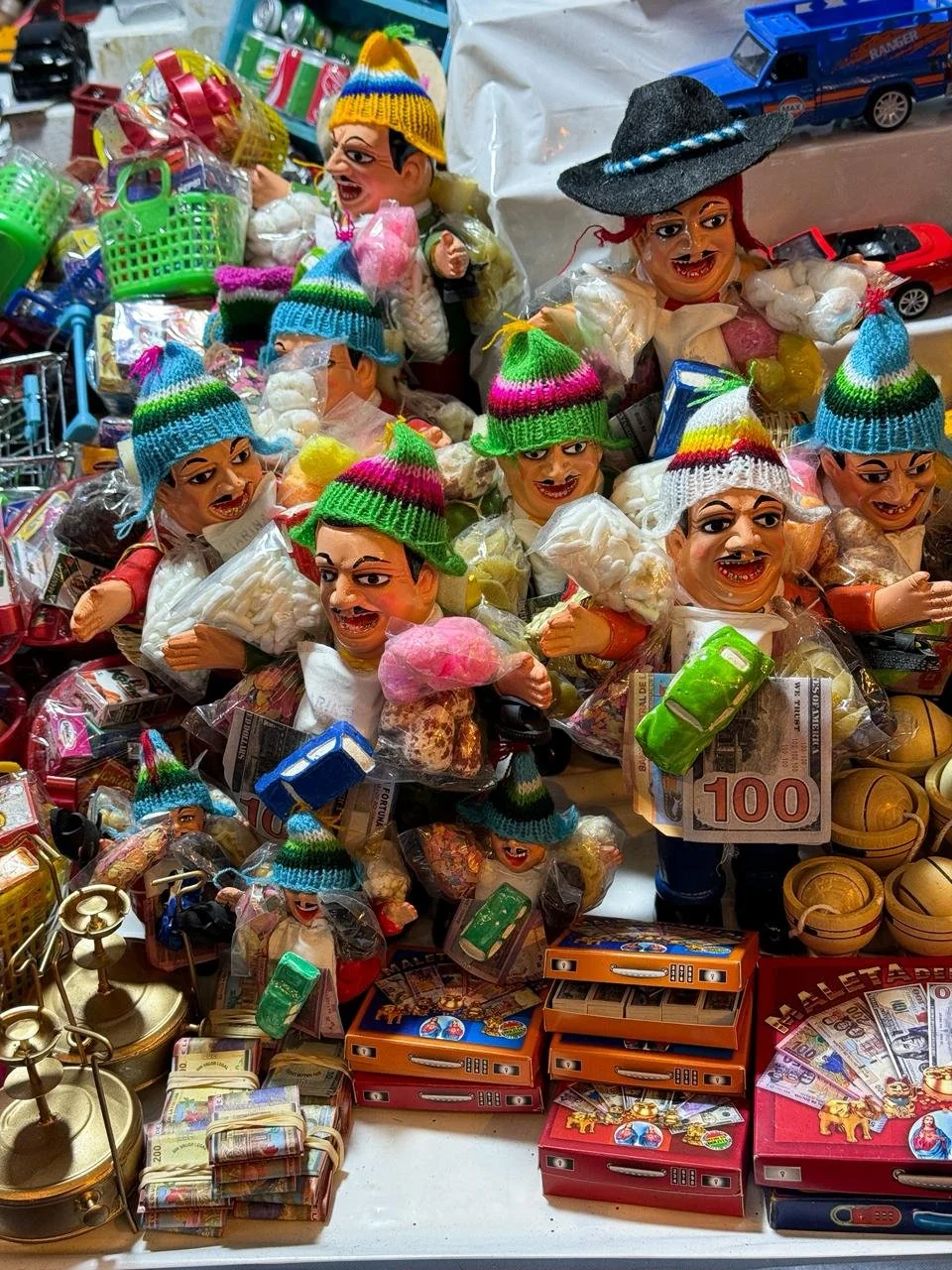
The small smiling figure full of money, food, and goods is Ekeko. People “feed” him with cigarettes or offerings and believe he brings prosperity, work, and stability to the home.
2. Mini Passports & Suitcases
These are for people who dream of traveling, studying abroad, or starting a new life somewhere else. Many young Bolivians buy them hoping for visas, opportunities, and open borders.
3. Mini Houses & Keys
A tiny house or key represents the wish for a real home, independence, or financial security. For many families, this is one of the most emotional symbols.
4. Roosters (Gallos)
Roosters are linked to relationships and marriage. Giving someone a rooster can mean “I choose you” or “I want to build a future with you.” Yes — it’s very romantic in its own Bolivian way.
5. Mini Money & Contracts
Fake dollars, contracts, and business papers represent hopes for work, success, and stable income. Entrepreneurs, students, and families often buy these for a better year ahead.
Together, these small objects show that Alasitas is not about buying things — it’s about choosing what you want to grow in your life.
Here, everything is small, except the dreams!
Taking a Piece of Alasitas With You
Well, that’s a small Alasitas guide to help you understand it, and hopefully to inspire you to go and visit. It’s one of those experiences you will remember long after you leave La Paz. And yes, you can even get “mini married” at this fair.
You can easily explore Alasitas on your own, but if you want a deeper meaning and a really special experience, going with a local guide makes a big difference. They know the stories behind the stalls, the rituals, and the small details you might otherwise miss.
If you have any questions about La Paz or about Alasitas, just contact us. We’re here to help you make the most out of your trip.
See you around 🤍
Elin & del Mundo Team